by Gloria Ballard | Mar 1, 2022
Invite some friends over for an outdoor gathering, tap some buttons on your phone, and smile as your guests look around and exclaim, “Ooh, where’s that sound coming from?” It’s coming from an outdoor audio system that brings another layer of enjoyment to your outdoor retreat.
“Outdoor audio is one of the newest offerings,” says Tim Nebel, Gardens of Babylon’s operations manager for irrigation, lighting and audio. “And we are really excited about it. You absolutely have to hear it in person to get a feel for the quality, and you can! Book a free demo through our website and we will bring a system to your home, set it up in 10 minutes, and show you how to use it in 2 minutes. We can even leave it with you over the weekend to play with!
Gardens of Babylon is a certified dealer of Coastal Source, a landscape audio systems company based in Moorestown, NJ. “We tested a few different systems, and Coastal Source speakers are far and away better than anything else we heard.” The quality is key, Nebel says. “It’s built to withstand the outdoors for a long time. But the sound quality is what stood out. There’s nothing that compares.”
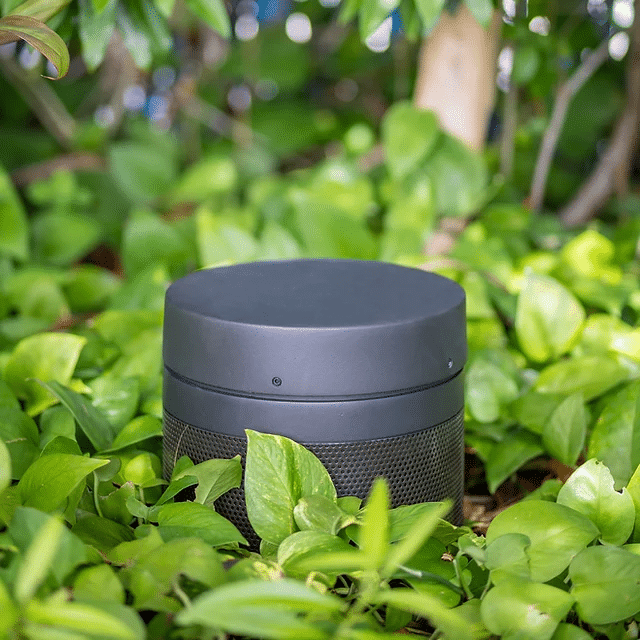
Nebel explains: Coastal source systems allow connectivity through Bluetooth, with limited range, or with Sonos, which can be integrated into an existing home audio system. “Coastal Source systems’ speakers have a tweeter that catches the high notes, a subtweeter that catches the middle, and the subwoofer catches the lows,” he says. “They offer a variety of options for different budgets. But even at the most basic, the sound quality blows any portable Bluetooth speaker out of the water.”
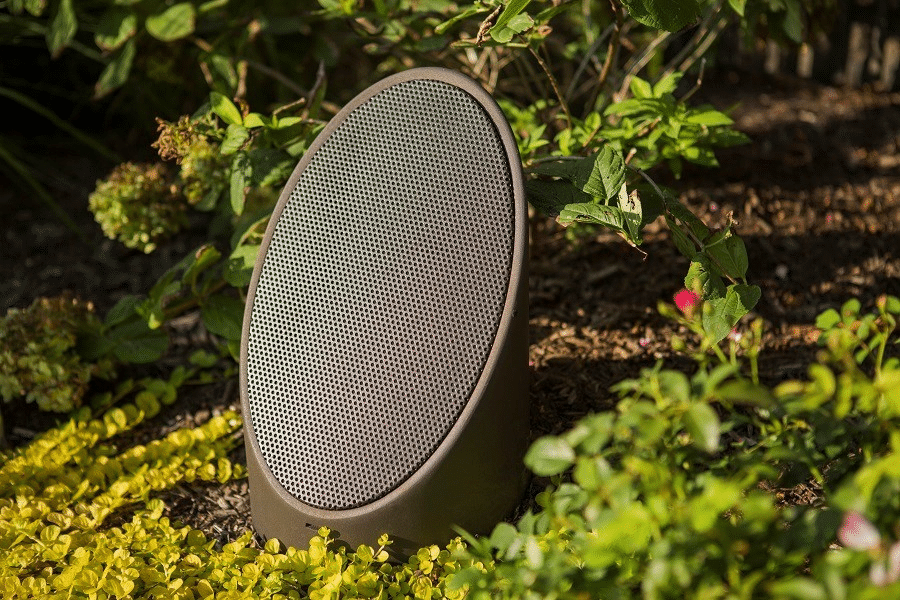
You hear the sound, but you may not see where it’s coming from; the most visible components of the system are designed to blend in with the landscape.
“The speakers are typically buried in the landscape so that just the head of the speaker is showing,” Nebel explains. “They look very sharp, and blend in nicely.” And they are built to live outside year round, made from the same material that is used to make Yeti coolers, he says.
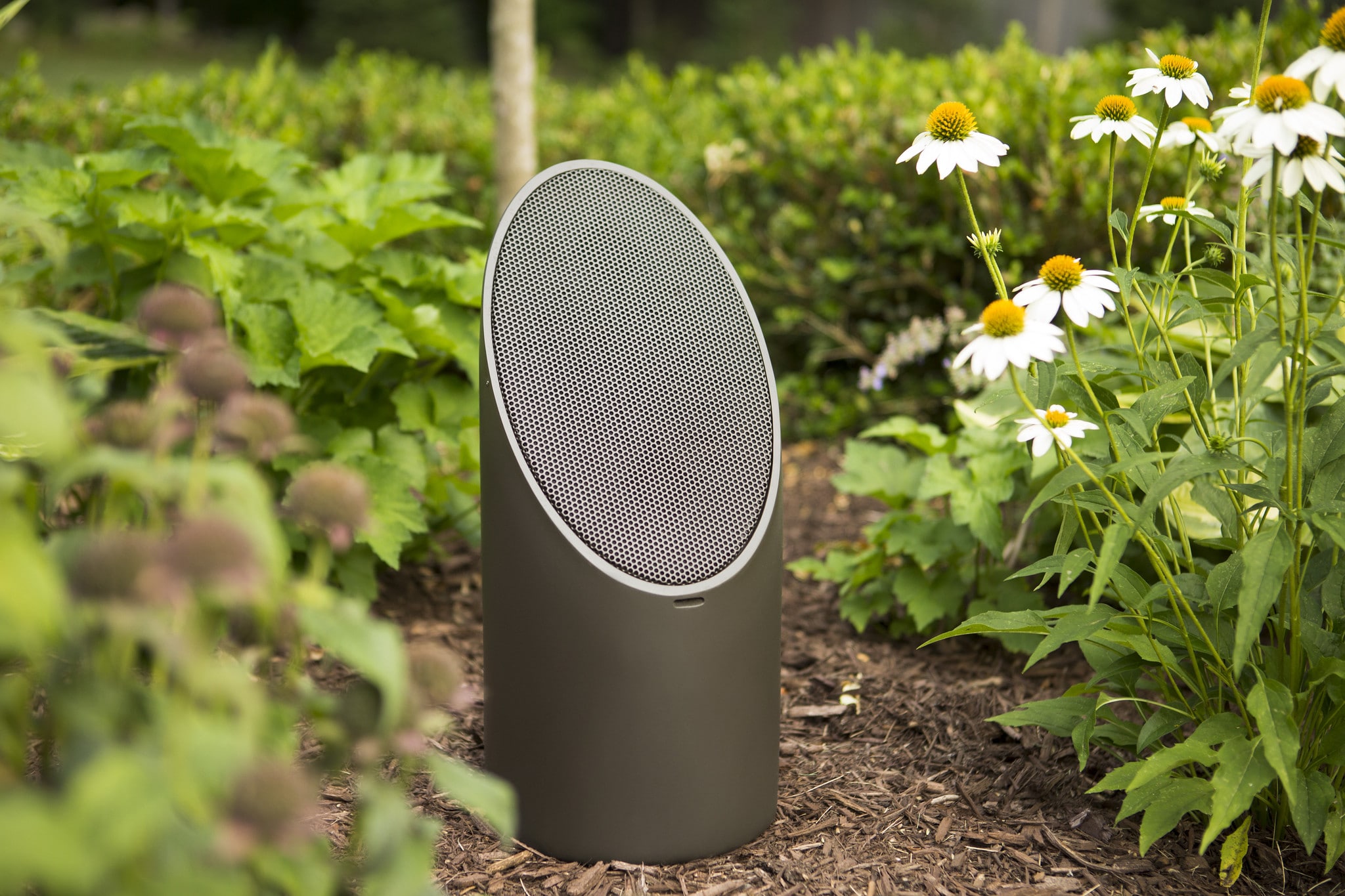
There are three package levels of the company’s products. The entry-level package provides two 8-inch mini-bollard speakers; a slightly larger 10.0 2-way bollard provides more robust sound, and the 10.0 three-way ellipsis bollards – Coastal Source’s flagship package – “has the most robust sound of anything they offer,” Nebel says. Any of them can be retrofitted into a landscape design or set on hardscaping to be able to move them around.
Other components of the system include an amplifier and power supply unit in a weatherproof box that is typically mounted on the home or other structure with a power outlet. The system’s wiring is encased in another coated cable that is more difficult to break than typical spliced connections, and features the company’s “plug and play” waterproof connections that lock into place.
“With the cabling leading from the amp to the ground in conduit, from there all you see is the ellipsis of the speakers in the landscape,” Nebel says. “They are designed to look natural in any landscape.”
When it’s time to que up the music, tap onto your phone or tablet and you have all your music sources – Apple Music, Pandora, Spotify, your own music library with digital mp3s – at your fingertips.
Interested in including audio in your backyard retreat? Schedule a free phone consultation through the Irrigation, Lighting & Audio portal on the Gardens of Babylon website or book a free demo to hear the system in your yard Outdoor Audio Demo. “We are offering free on-site demonstrations to anyone who wants to hear it,” Tim Nebel says. Schedule an in-person audio demonstration to hear how outdoor audio can transform your outdoor living areas.
by Gloria Ballard | Aug 17, 2021
——————————————————————–
Watering is one of the essential components needed to keep a landscape alive and thriving. But how much water is enough? Is there such a thing as too much?
How Much Water Do Plants Really Need?
There’s no one-size-fits-all answer to this basic question. Experts at the University of Tennessee Extension remind us that moisture needs differ based on plant species, season, and the environment, along with whether the gardener’s goal is to achieve optimum growth and performance, or merely to ensure survival.
For example, established perennial beds in loamy soil may be fine with an occasional dry spell, especially if the gardener has supplied mulch; that tomato patch, however, is likely to produce cracked, diseased fruit if watering is inconsistent. And plants in sandy soil, which drains more quickly, may need more attention.
Too much water, though, can produce its own set of problems. Clay soil, which doesn’t drain well, can be a cause of damaged or rotting roots. Plants in waterlogged soil may drown due to lack of oxygen. Overhead watering at the wrong time of day can result in fungal diseases (morning watering is best so that plants’ foliage dries before nightfall). Compacted soil can mean the water that does fall (or drip or sprinkle) runs off and doesn’t reach the roots.
Irrigation Guidelines
UT Extension provides general guidelines for specific types of landscape plants – recognizing, still, that needs vary based on species, environmental conditions and age of the plants. Note, too: A rain gauge, which helps keep up with how much “natural” irrigation occurs and when supplemental irrigation is necessary, could be considered an essential tool:
Lawns: The general rule for grass is 1 inch of water per week, but remember that this may depend on the species of grass, condition of the soil and age of the lawn. For grass with deeper roots, experts suggest watering deeper, but less frequently, as shorter watering every day encourages shallow root growth.
Perennial beds: Water newly planted perennials deeply to encourage deep root growth while they are establishing themselves in the beds. After they’re established, many native and adapted species may not require regular watering under normal conditions. During periods when rainfall is scant or nonexistent, even well-established plants may need supplemental irrigation.
Vegetables and annuals: These are notoriously thirsty plants, but still may not need daily watering. UT Extension suggests watering when the top 4 to 6 inches of soil is no longer moist, or 3 to 6 inches when plants are new and establishing roots. Keep an eye on the amount of rain the garden gets, and gauge your garden’s needs for supplemental watering. And use mulch to maintain more consistent moisture in the soil.
Containers: Soil in containers dries out quickly, and it’s worth checking every day during the hottest part of summer to see if the soil in your porch or patio plants needs moisture.
Irrigation Systems
Hauling hoses and sprinklers around the yard and garden beds can be a chore, especially in mid-summer heat. An in-ground irrigation system can be an appealing option, says Tim Nebel, Gardens of Babylon’s landscape production manager.
“The biggest advantage, if you have a system set up correctly and a good watering schedule, is that the system is taking care of watering needs for you,” Nebel says. And when systems can be programmed to provide water as needed and adjusted to meet different needs throughout the season, it can save money.
Different types of nozzles in a system provide different functions. Rotors are generally used for turf areas, Nebel explains. Fixed spray heads cover smaller lawns or garden beds, and drip irrigation can be set up to focus on plants’ root zones. This can help assure that specific areas get enough – but not too much – water for gardens and lawns to thrive throughout the seasons.
And like many other home accoutrements, irrigation systems can be “smart.” “Smart controllers run through wi-fi through an app on the phone,” Nebel explains. “You can run it from anywhere through remote control. Smart systems (such as Hunter Industries’ system Hydrawise) can adjust watering based on local weather data – if it’s raining when the system is programmed to run, it doesn’t turn itself on.
An advantage of setting up a regular schedule on any system is that it’s worry-free, Nebel says. “You set it up and don’ have to think about it except to make sure it’s in auto-run position.”
*
Gardens of Babylon installs and maintains irrigation systems, and offers different maintenance package levels for landscapes of all sizes. Click here to learn more about the systems and book a consultation with the Landscape Design team.
by Gloria Ballard | Sep 4, 2020
Rain is good for gardens, of course. Too much of it, pooling in the wrong places in your yard, can cause drainage problems around your landscape and in your home.
“Proper drainage is probably one of the most important services that you should have around your home,” says Gardens of Babylon owner Mark Kerske. “You want to keep the water away from the foundation of your house.”
Water running into the basement or crawlspace can cause mold and other problems. Downspouts from the gutter can push rainwater into the foundation if they’re not properly routed. Water that leads to damage on any part of the property causes trouble over time. “The problem with poor drainage is erosion,” Kerske says. “It can affect the structure of your house or driveway.”
Change the course
There are several methods for guiding water away from the house, depending on the origin of the problem.
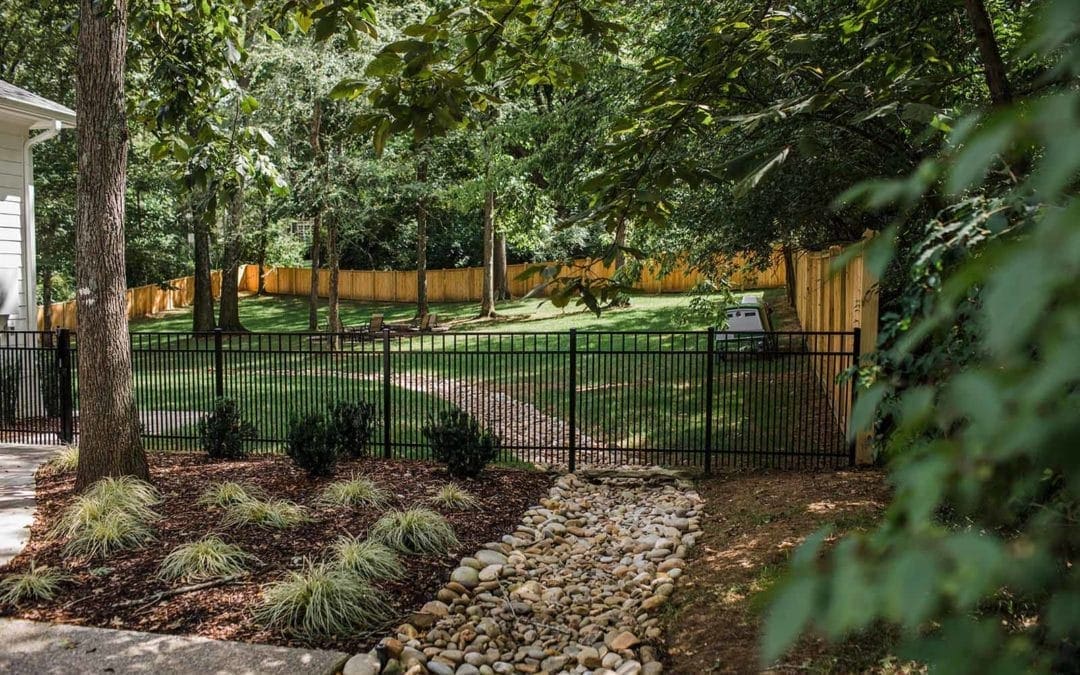
- Downspout extension: If rainwater rushes through a gutter downspout near the foundation, a tube on the end of the downspout can empty rainwater farther away from the house during a downpour. The piping can be aboveground, or installed from the downspout in a trench that runs underground, out from under any mulched beds, where the water exits through a pop-up drainage emitter in the lawn.
- Berm: The way water travels over the ground depends on the topography of the property, and if water naturally runs toward the house, a bern –a raised soil barrier or ridge — can be an effective way to direct water away from an area, Kerske says.
- Swale: A trench-like depression in the ground forms a chute, of sorts, to direct the water flow. It can be lined with large chunks of rocks to slow the velocity of the water. “When you have a large amount of water coming toward your house, you want to slow it down,” he says. “If you direct water into the swale, you can get it to go where you want.”
Again, the lay of the land will suggest which method is best. “If the land behind the house is much higher, that’s where you really need a good swale or berm,” Kerske says. “The key is to move the water away from where it wants to naturally go.”
Design challenges
For any landscape design project, a designer and homeowner will discuss any drainage problems on the property that need to be addressed. “That’s the first step. We can do a drainage consultation and assess what the problem is.” Kerske says. “If it’s something they can’t do or don’t want to do, we can put together a design and calculate what it will cost to do the repairs.”
If the solution to a drainage problem calls for a swale or a berm, that can become part of the overall landscape design. “We can put native plants along the streambank. We can use groundcovers, and make it look like the swale belongs naturally in the landscape. That’s where a designer can really be of help,” Kerske says. “The designer can incorporate that drainage swale or berm into the landscape plans.”
Solving drainage and erosion problems in a landscape is the first step in any design plan, Kerske says. “There are so many hills here in Middle Tennessee. We do a lot of drainage work,” he says. “I think proper drainage is the most important part of landscaping.”
*
Gardens of Babylon offers landscape drainage and erosion solutions. Book a consultation with a Gardens of Babylon landscape professional here.
by Matt Kerske | Aug 4, 2020
When choosing the right hydrangea, there are a couple things to consider first:
- Will the hydrangea go in full sun, partial sun, or shade?
- What size shrub were you looking for?
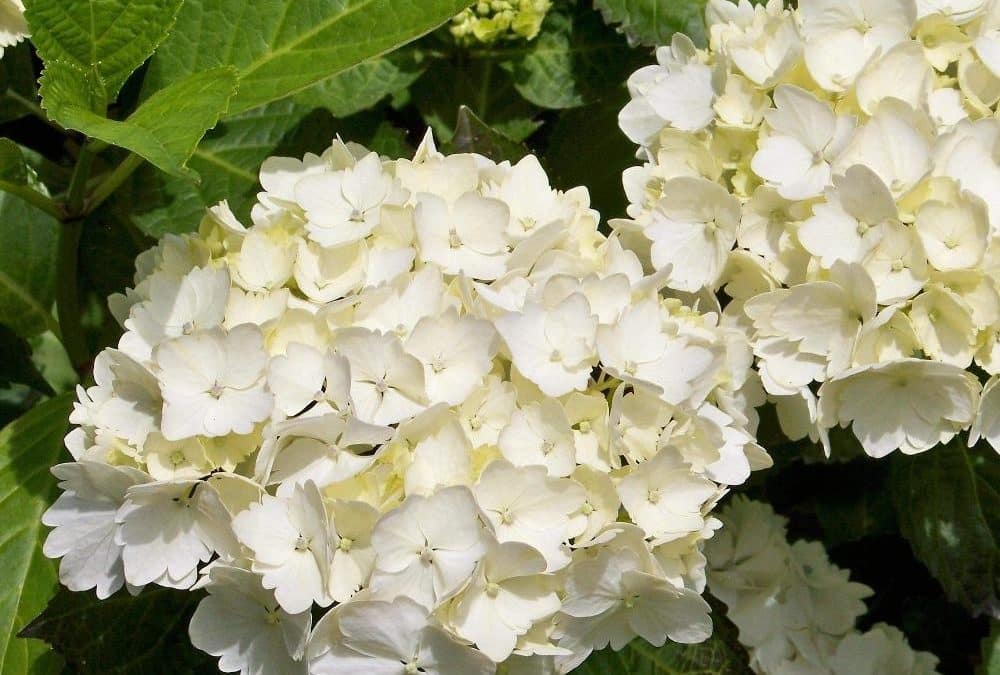
- Do you want colorful blooms or just white?
Our staff is happy to help if you need more advice or any help deciding which of these options to go with!
Full Sun Hydrangeas
These hydrangeas can tolerate partial sun but prefer full sun (6-8 hours)
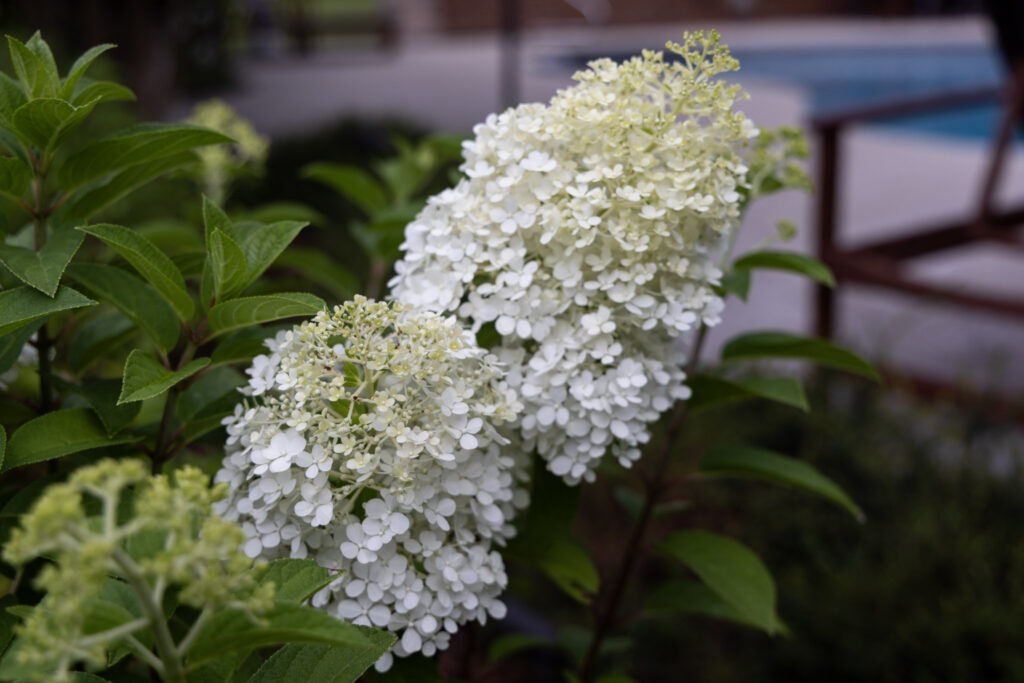 ‘Bobo’ Hydrangea paniculata – This dwarf flowering bush grows to about 3’ x 3’ and blooms during the summer with white blooms. They bloom on new growth and would need to be pruned in late winter or early spring. These make good border plants and have strong stems that do not droop with full blooms.
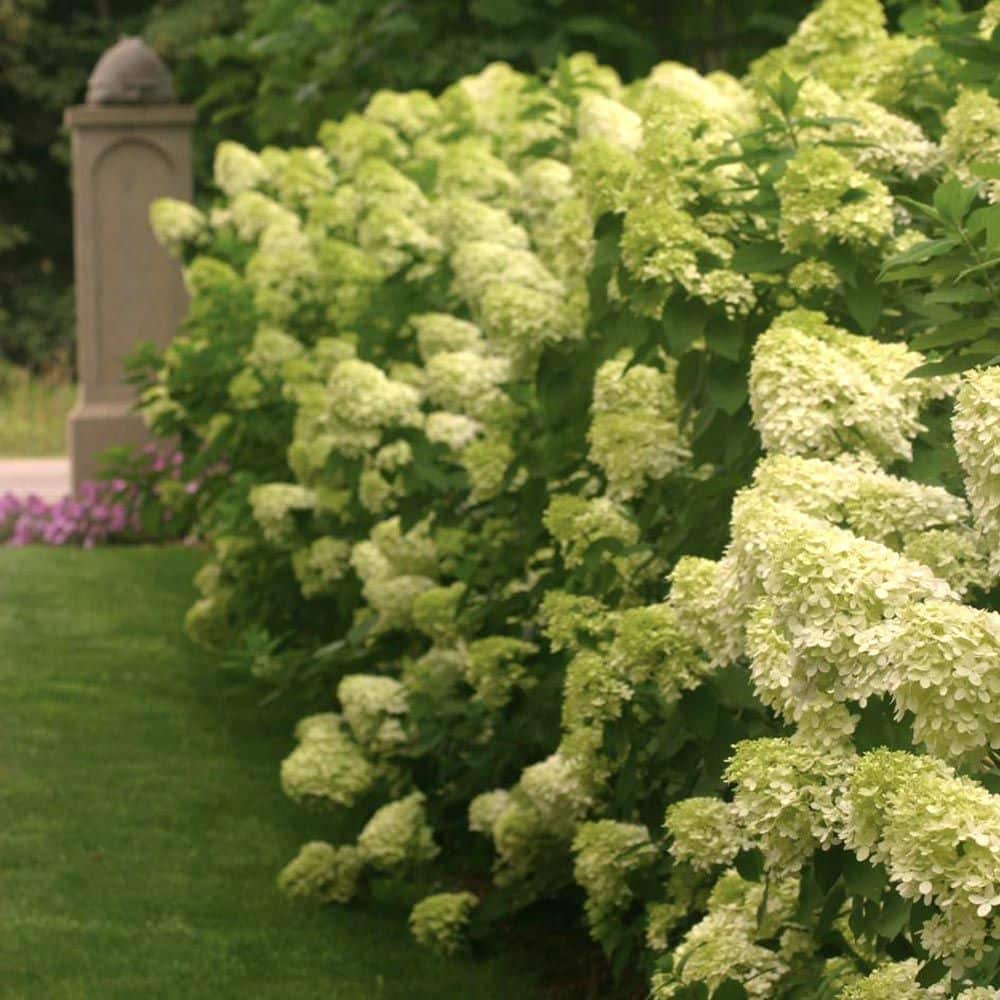
‘Limelight’ Hydrangea paniculata – With white summer blooms that eventually turn white and fade to a rosy shade, these grow to about 6’- 8’ x 6’- 8’. They bloom on new growth and need to be pruned in late winter or early spring. Stems occasionally need support when in bloom.
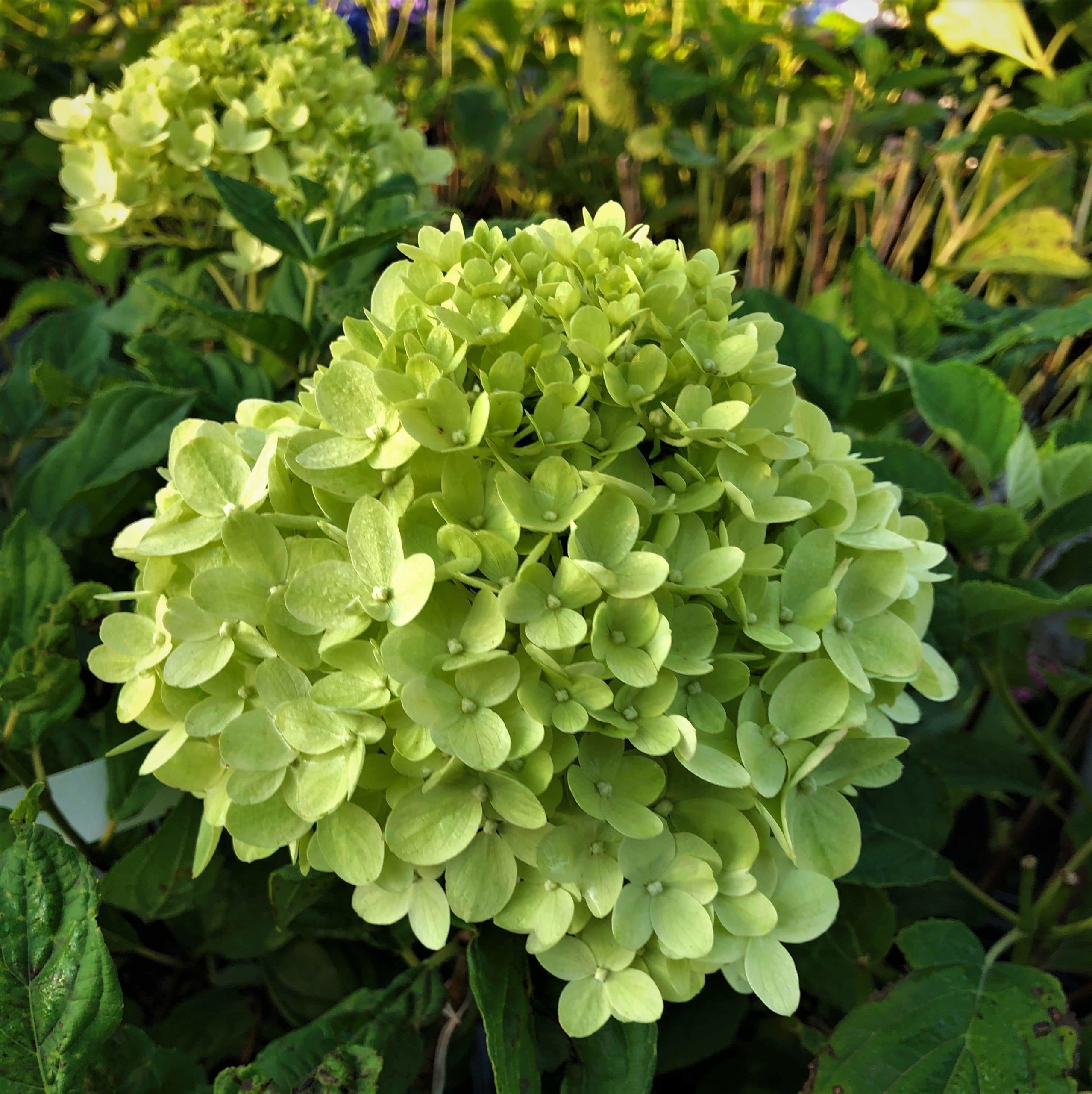
‘Little Lime’ Hydrangea paniculata – This is a dwarf form of
the Limelight and grows to about 3’- 5’ x 3’- 5’.
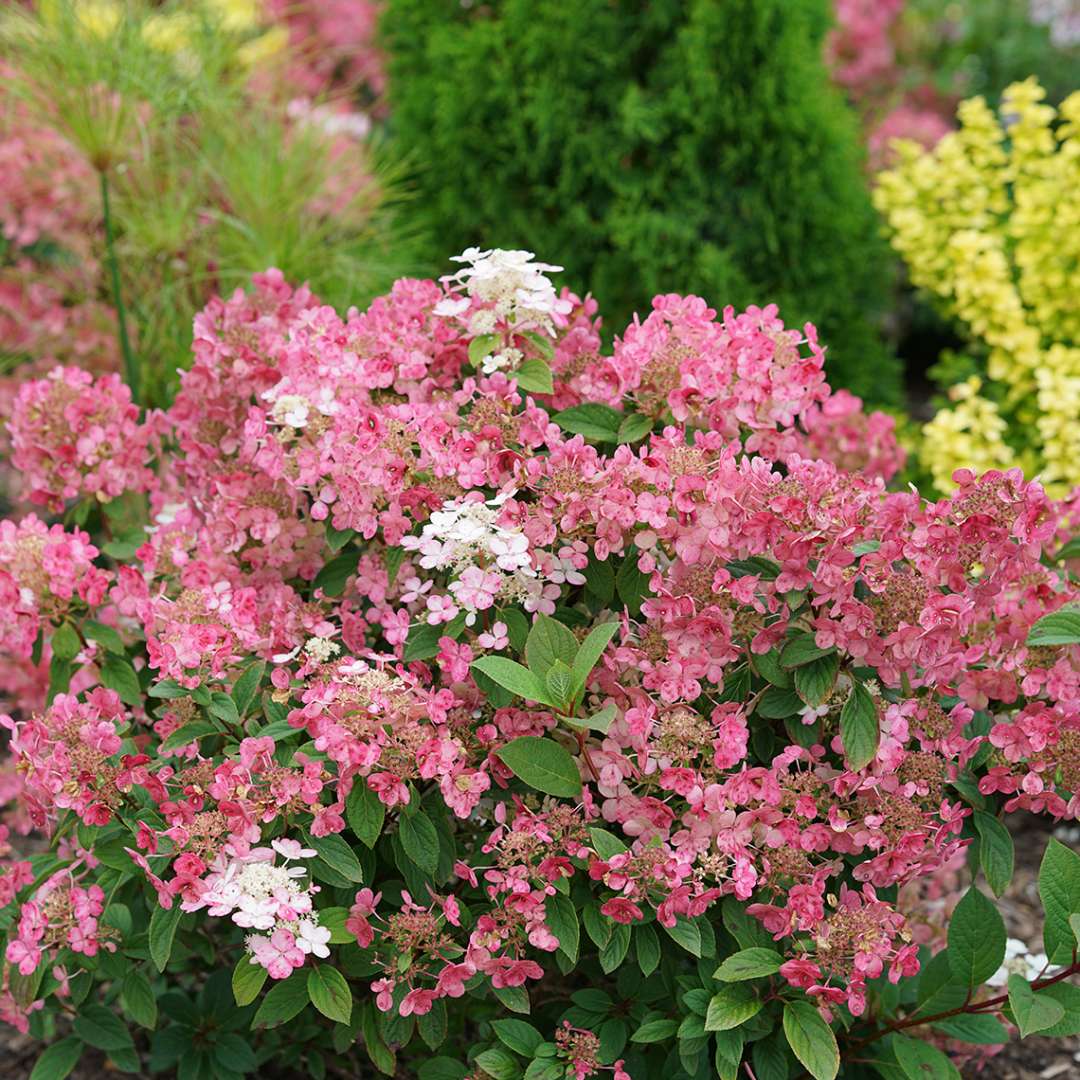
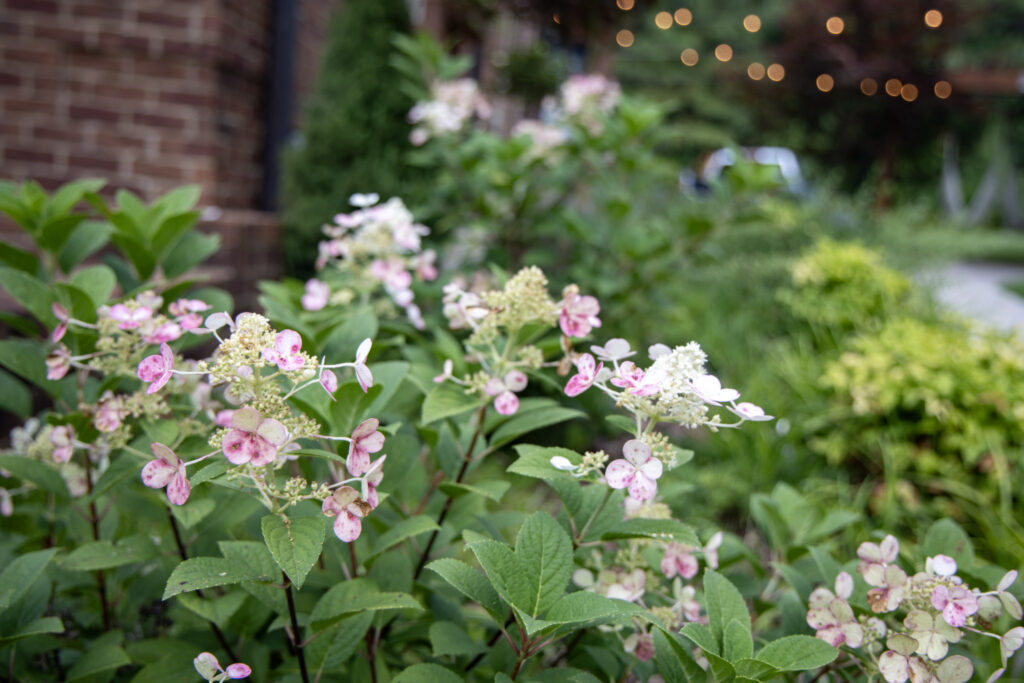
‘Quick Fire’ Hydrangea paniculata – This bush grows
to about 6’- 8’ x 6’- 8’ and blooms white fading to red into
the fall. They need to be pruned in late winter or early spring. This hydrangea begins blooming in the summer about 1 month before other summer blooming hydrangeas.
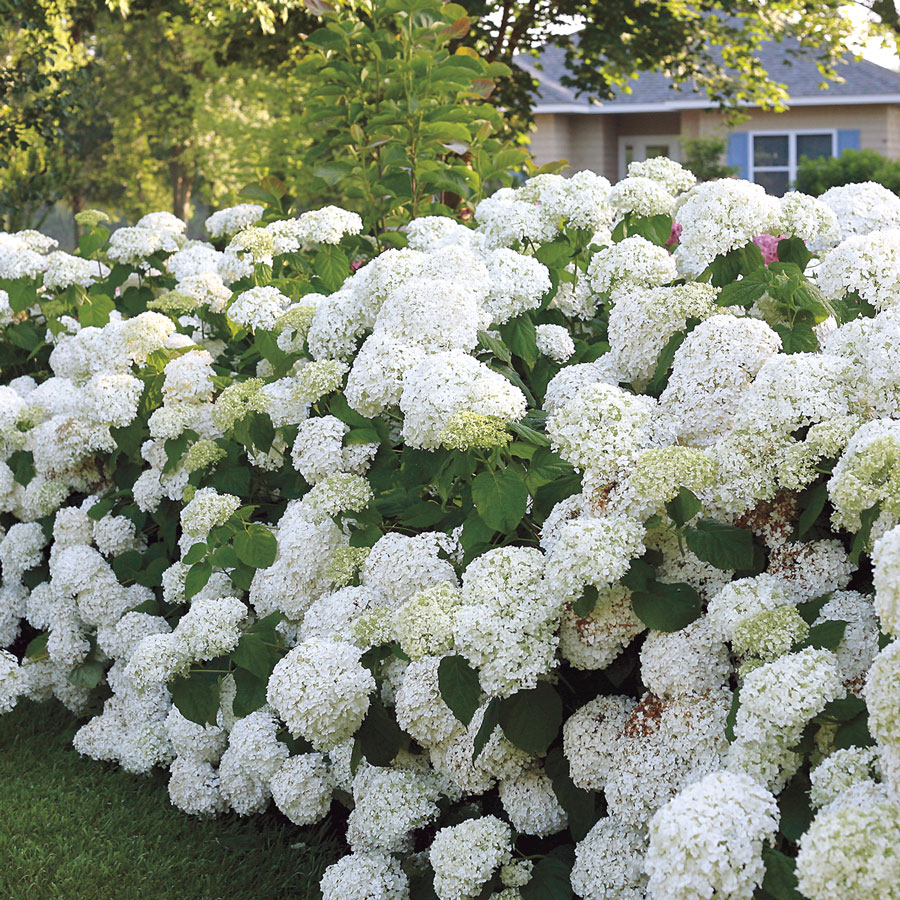
‘Incrediball’ Hydrangea arborescens – This gorgeous white flower grows to about 5’ x 5’ and is a native type. The
Incrediball is an improved variety of the Annabelle that has larger white blooms and sturdier stems to support them.
Cut back in late winter to early spring.

‘Annabelle’ Hydrangea arborescens – These flowers grows to about 5’ x 5’ and is a native type. These hydrangeas
bloom white and make a nice addition to rain gardens.
Partial Sun Hydrangeas
These hydrangeas can handle shade but prefer partial sun (4-6 hours)
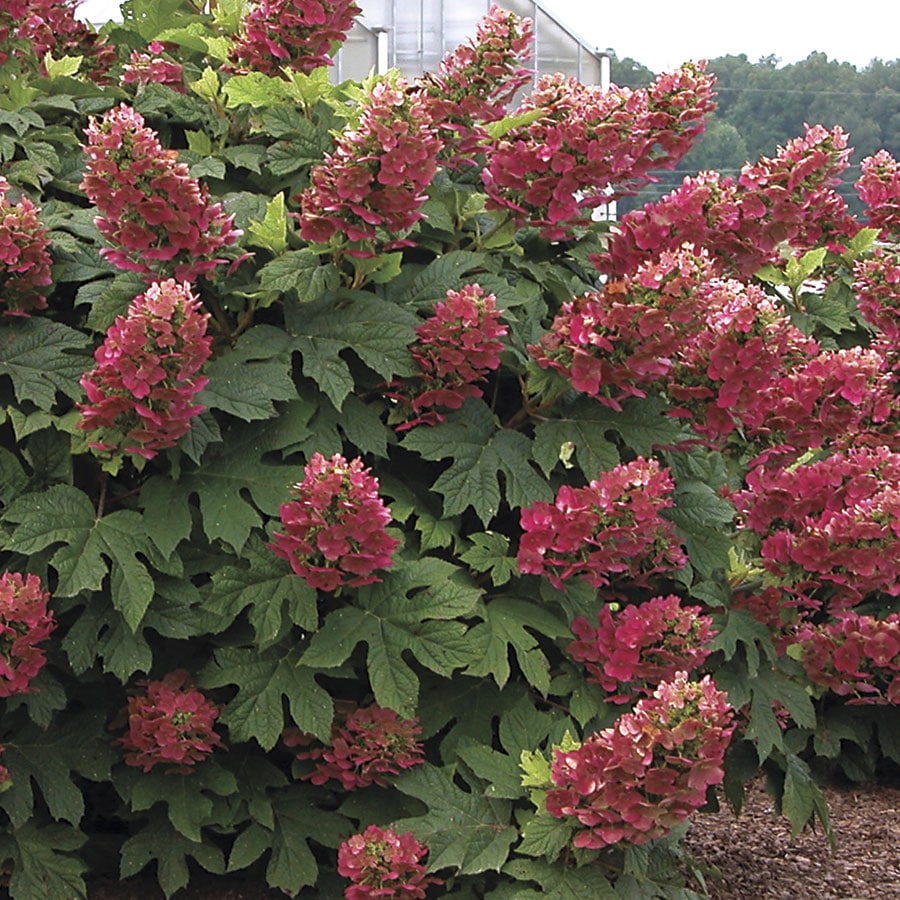
‘Ruby Slippers’ Hydrangea quercifolia – This is a dwarf hydrangea that grows to about 4’ x 4’ and blooms white fading to red. Oakleaf hydrangeas are a native type. Prune after blooming ends in fall.
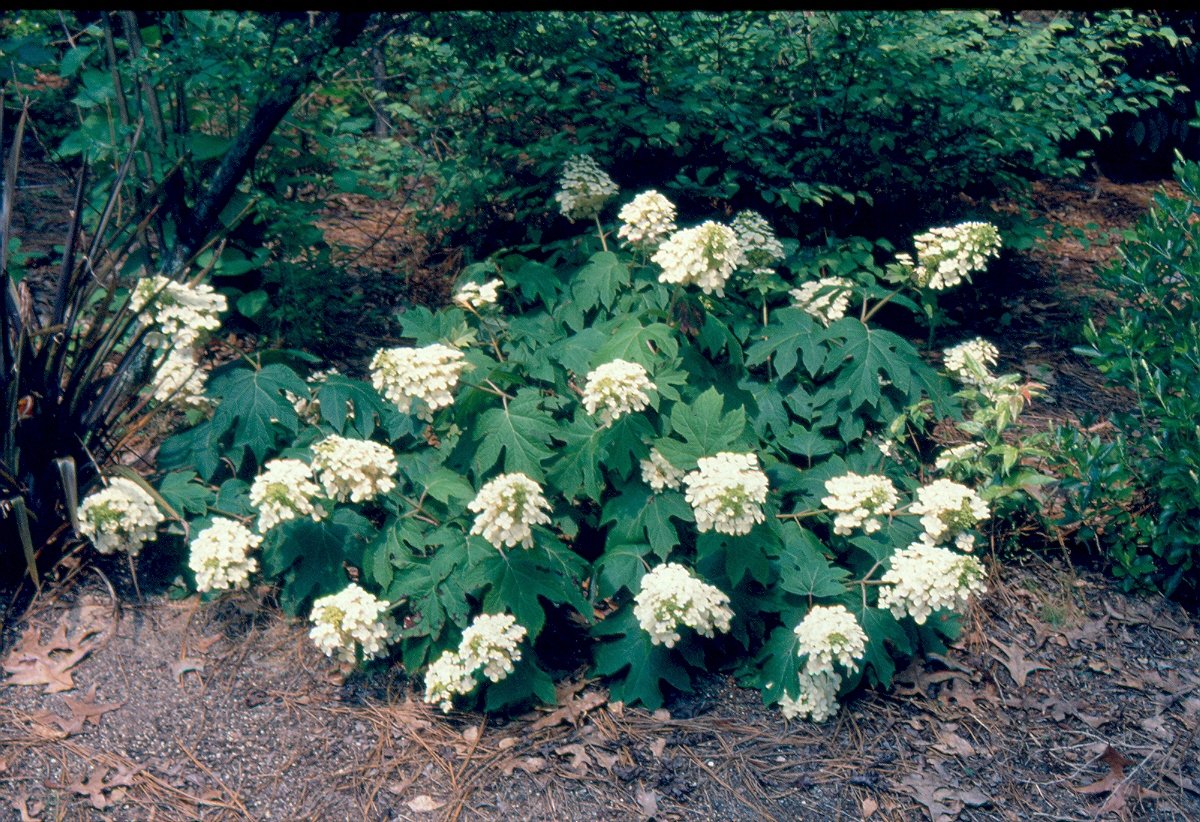
‘Pee Wee’ Hydrangea quercifolia – This is a dwarf version that grows to about 3’ x 3’ and blooms white. Oakleaf hydrangeas are a native type. Prune after blooming ends in fall.
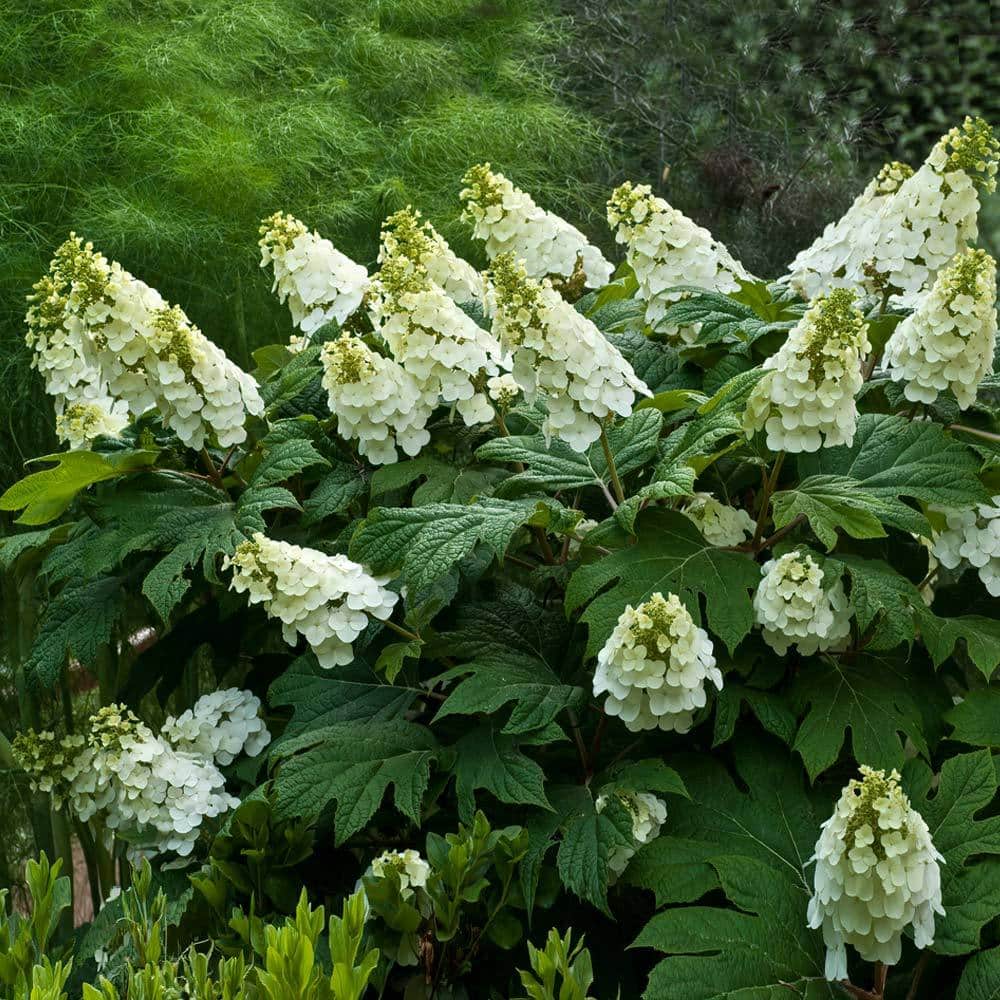
‘Alice’ Hydrangea quercifolia- This hydrangea grows to about 6’ – 8’ x 6’ – 8’ and blooms white. It is a native variety and is pruned after blooming ends in fall. This type is known for pest and disease resistance.
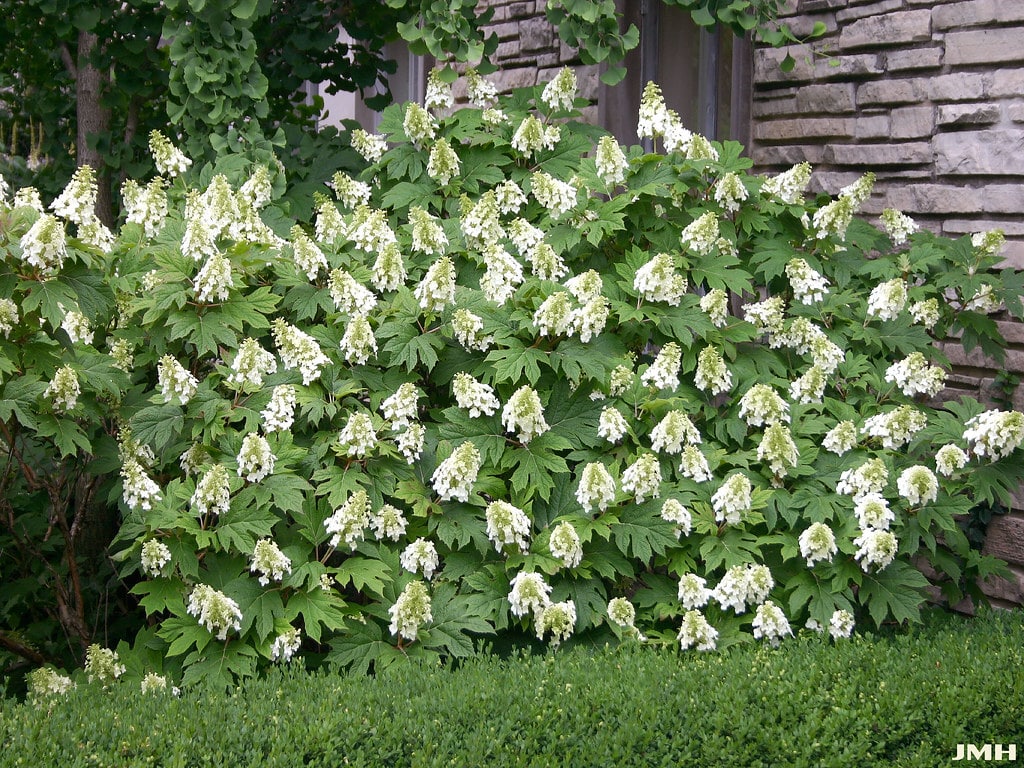
‘Snow queen’ Hydrangea quercifolia – This hydrangea grows to about 6’ x 6’ and blooms white. It is a native variety and is pruned after blooming ends in fall.
Shade Hydrangeas
These hydrangeas can tolerate partial sun but prefer full shade
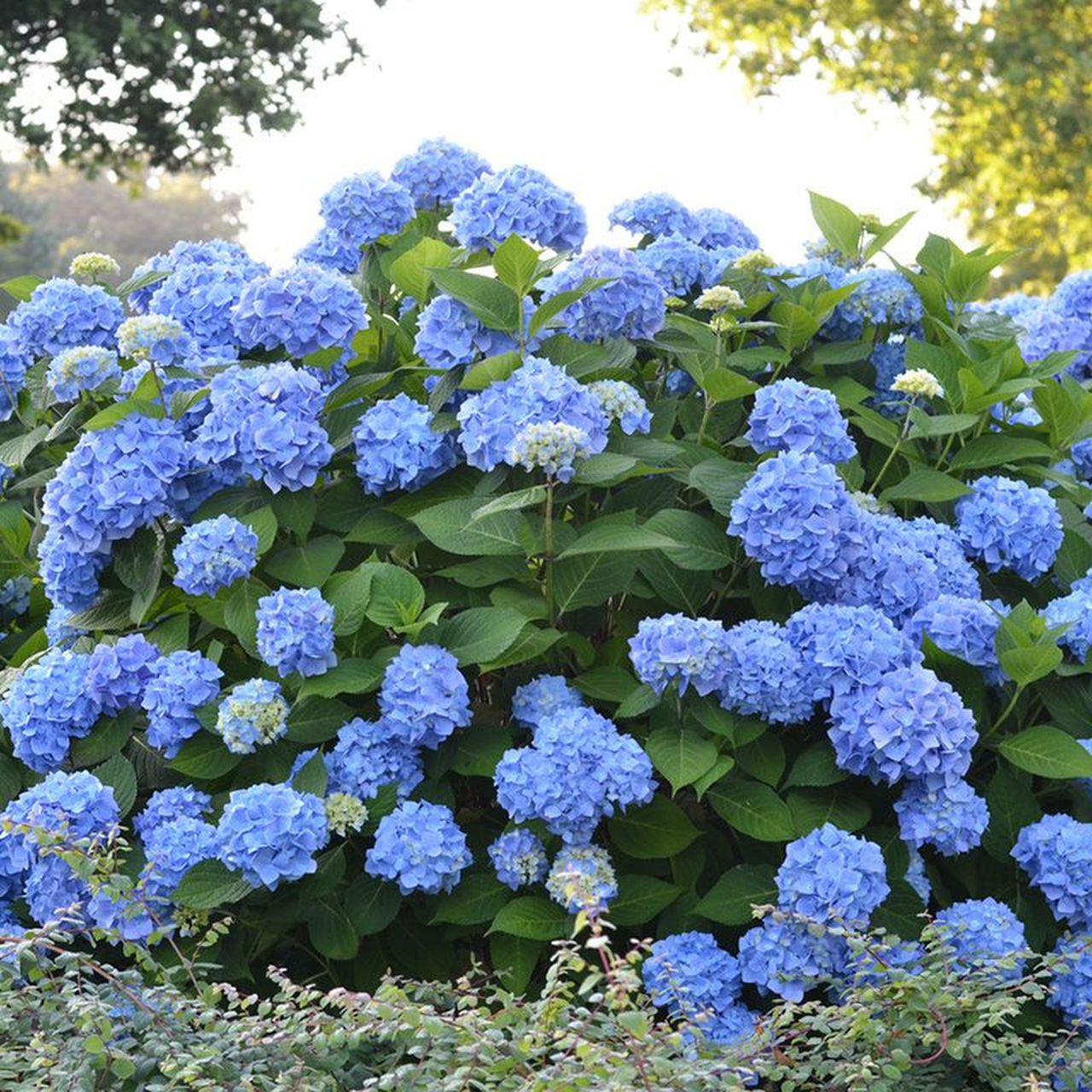
‘Endless Summer Bloomstruck’ Hydrangea macrophylla –
These beauties grow to about 4’ x 4’ and bloom ranging from purple to pink depending on pH of soil. More acidic soil makes them more blueish purple and lime can help them to turn pink. The endless summer collection can bloom on old and new growth enabling them to be pruned throughout the year.
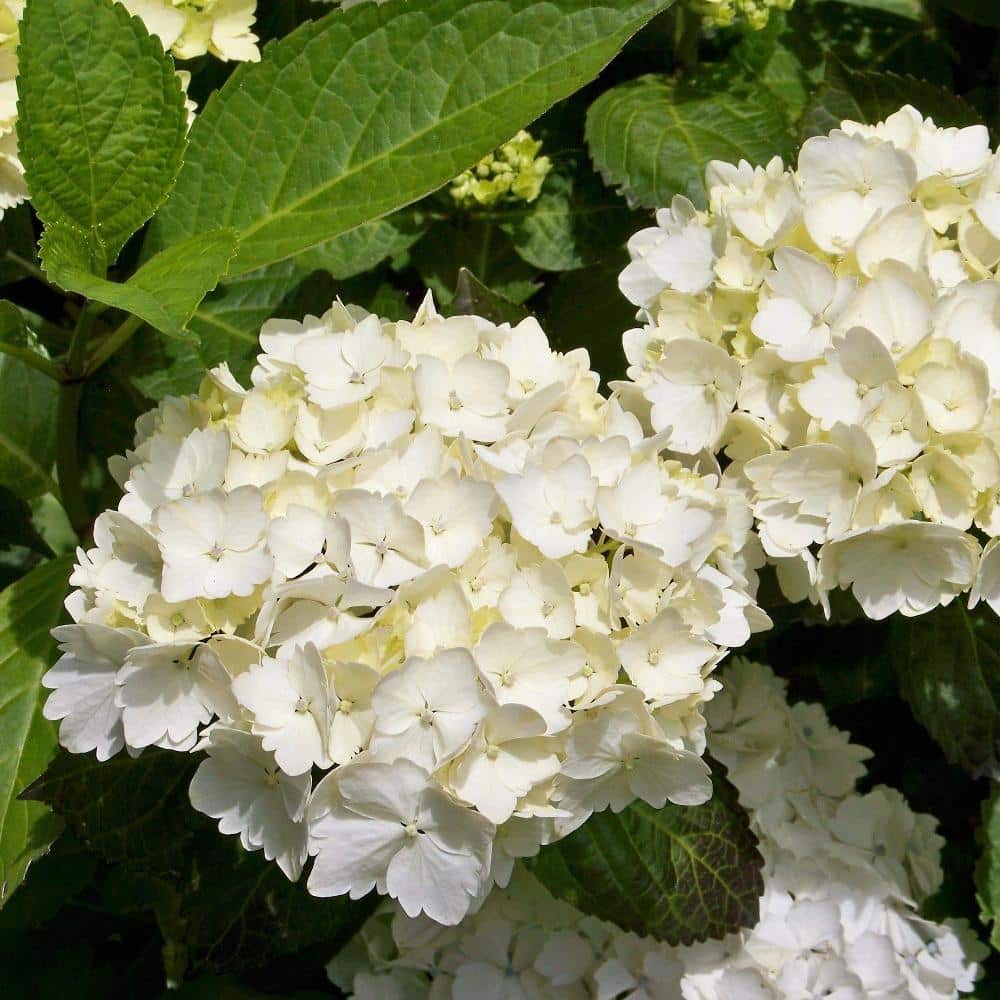
‘Endless Summer Blushing Bride’ Hydrangea macrophylla-
These grow to about 3’- 6’ x 3’- 6’ and bloom white. The endless summer collection can bloom on old and new growth enabling them to be pruned throughout the year.
With any of these hydrangeas, it is important to know that they need a lot of water and will need to be watered regularly the first couple seasons after planting until they are established. The ideal time to plant is in the fall!
Stop by the store to shop, and our knowledgeable staff will be happy to help find you the perfect plant for your landscape!

by Gloria Ballard | Jul 1, 2020
Whether your yard is a blank slate that needs form and color or a hot mess that needs to be re-imagined and refurbished, a landscape designer can help. How do you find the right person for the job?
First, look for someone who has training in the field, is certified and has experience, suggests Gardens of Babylon’s co-owner Matt Kerske. “A designer learns to become a great designer by seeing finished designs and learning from them.” A landscape architect is also schooled in handling drainage issues, hardscape elements and other structural changes.
Consider the scale of your ideas and ask to see projects in the designer’s portfolio to determine the level and type of work they do. Some designers only provide a concept and final plan, and may suggest installers; others offer start-to-finish design and installation. Think about whether you want design only, or if yours is to be a design-and-install project.
You + Landscape Designer = Working Together
It’s important for the designer’s and client’s visions to align from the beginning, and as a client, you can help the designer get a feel for your style by sharing pictures of landscapes you like, or showing photos of your interior spaces.
Then it’s good to establish priorities. “I like to call them the needs and the wants in the beginning,” Matt says. A good designer can help define and adjust priorities, and will discuss what’s most important in considering a finished plan. Once work has begun, any revisions may cause delays and frustrations.
Consider the cost
For many clients, the budget is the really big consideration, Matt says. “It’s really common that people are not aware of what a lot of landscape elements cost.”
When the client has an idea at the beginning of the process of how much they can spend, the designer and client can work together to establish the scope of the work to be done. When the designer knows the budget boundaries, it’s easier to establish a realistic idea of what can be accomplished. This may mean choosing similar materials and finishes in a lower price range, for example, to achieve a client’s goal, so it’s important for the designer to have a sense of what a typical project can usually cost.
“It comes down to money, and value, for the client,” Matt says. “A designer wants to make sure the client is getting a good value for what they are expecting. This helps the customer establish priorities.”
Getting it done
Gardens of Babylon is a design/build company that works with clients from concept plan to final draft on the design end, and a project team that installs the landscape elements and plantings based on the design. The design/project team works with the client in choosing materials and plantings, and discusses any possible adjustments or modifications and their accompanying costs that may arise. “We make sure there are no hidden fees, and see the project from start to finish,” Matt says.
Designers on the staff have worked to develop a creative list of plants that are appropriate for the Middle Tennessee climate, and hardscape items that are time tested and durable. “Our firm has more than 15 years of experience and we’re very practical on our designs. That’s a great asset when it comes to ease and efficiency of the overall project.”
—
If you’re interested in speaking to designer about a new landscape project, click here to select a time for a free phone consultation.