We plant people have a hard time picking favorites. Nevertheless, there’s always something that stands out in our ever-expanding collections of houseplants and landscape selections. We polled the staff at Gardens of Babylon to find out what’s catching the attention of fellow plant-lovers lately.
Indoors
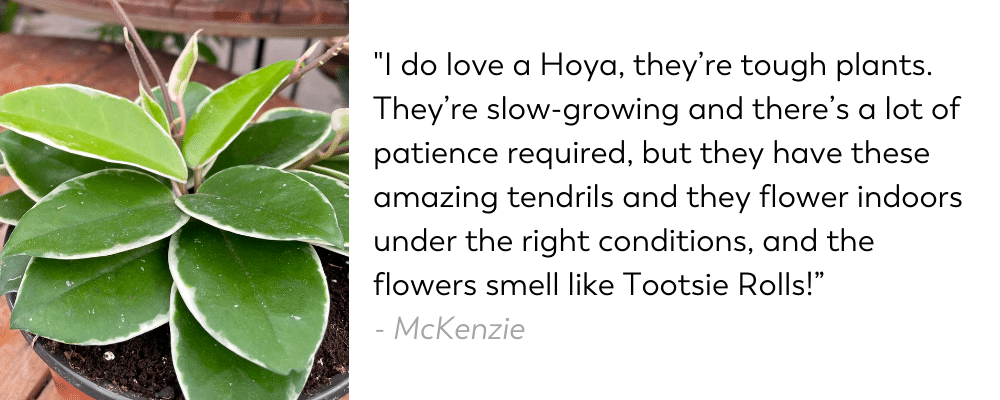
(Hoya – commonly called wax plant —enjoys bright, indirect light. Keep the soil moist in spring and summer, water less frequently in winter. Occasional misting to raise humidity is recommended).
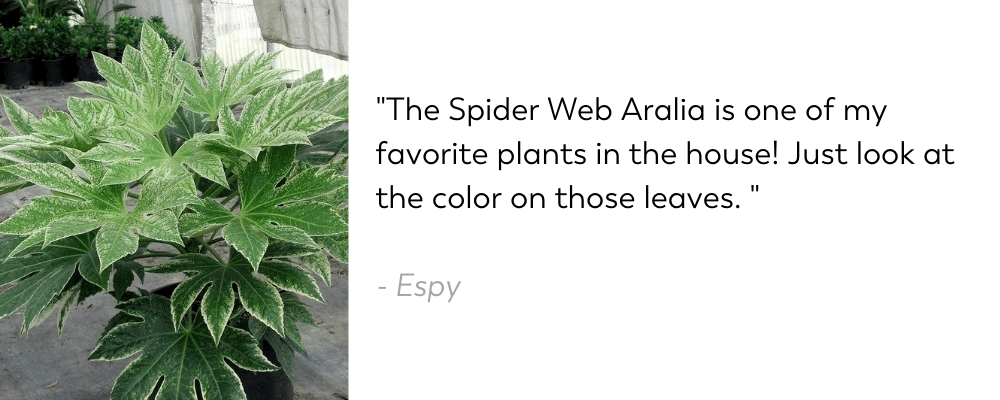
(Fatsia japonica ‘Spider Web’: Grows best in a sunny window with moderate/bright light. Water when the soil is dry.
This tropical beauty grows well in a container in a shady spot outdoors in summer.)
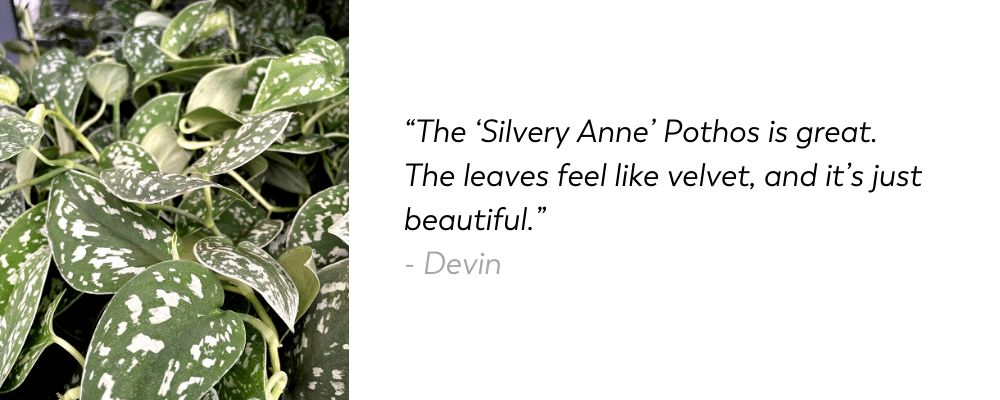
(In general, Pothos – Epipremnum aureum — prefers bright, indirect light but can tolerate low light; variegated
varieties may lose variegation if light is too low. Water as needed; they also tolerate occasional dry soil.)
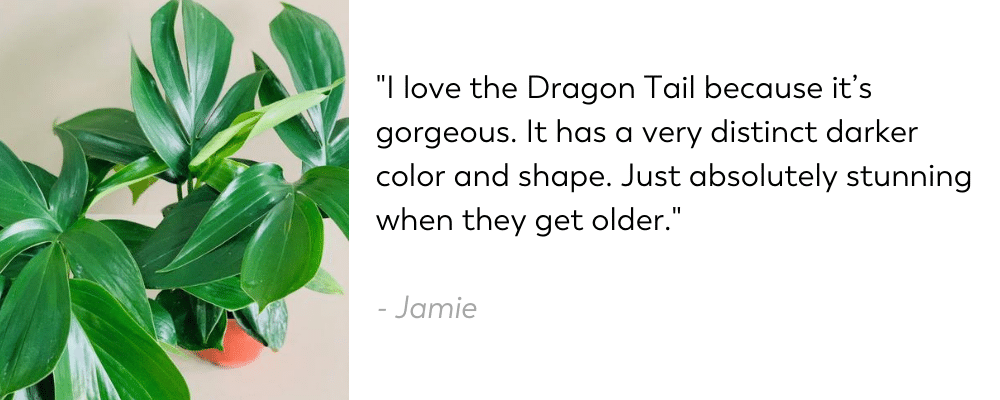
(Epipremnum ‘Dragon’s Tail’prefers bright, indirect light. Keep the soil consistently moist during spring and summer; water less in winter.)
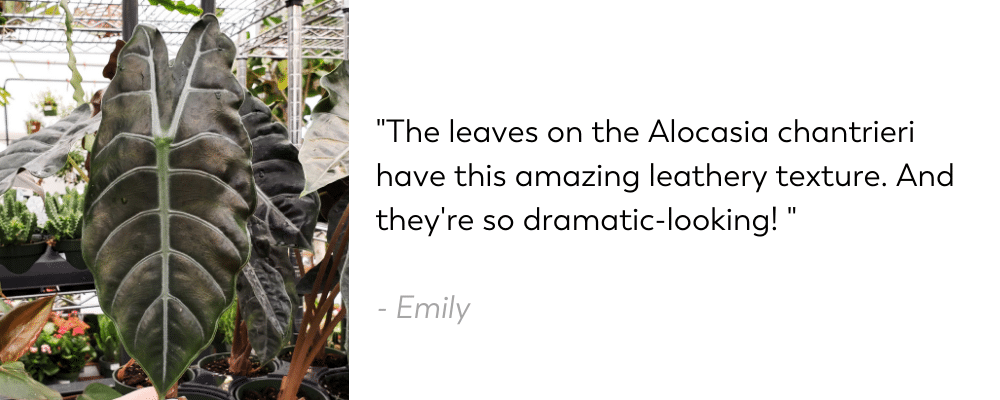
(Alocasia chantrieri thrives in bright, indirect light; allow the top couple of inches of
soil to dry out between watering. This plant welcomes a humid environment.)
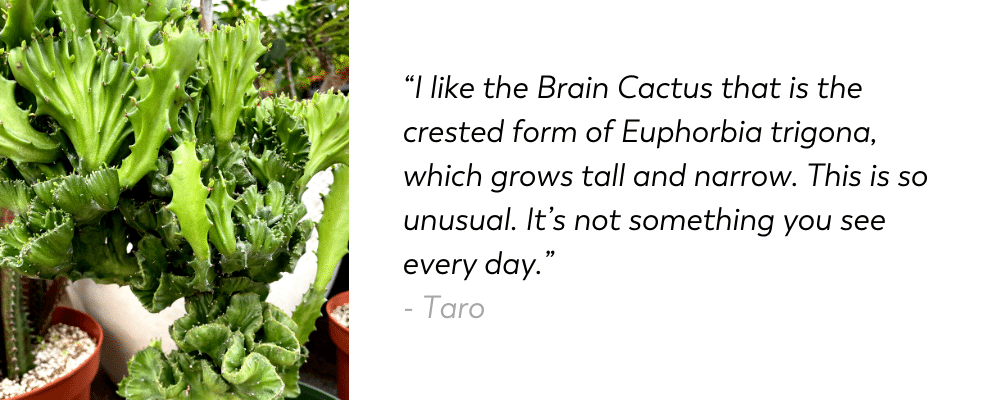
(Grow Euphorbia trigona in a sunny location, using cactus soil mix in a pot that drains well.
Water regularly during spring and summer, but allow the soil to dry in the top few inches.)
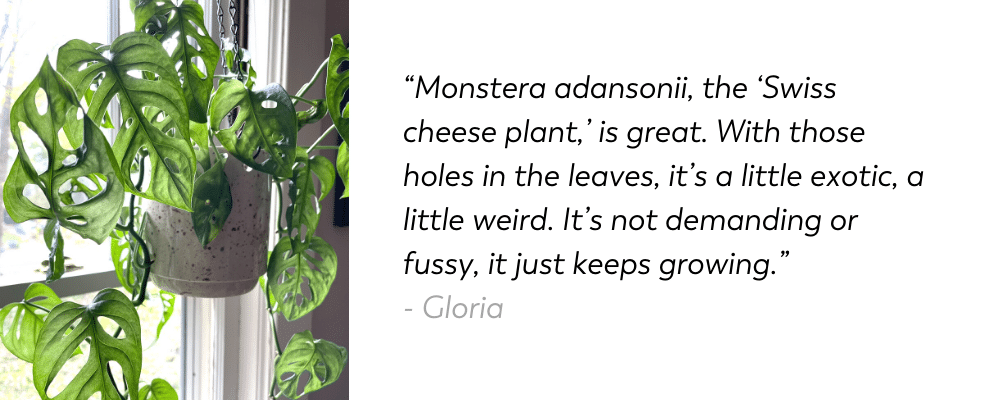
(Monstera adansonii thrives in bright, indirect light in a pot that drains well, and it
appreciates a bit more humidity. The vine can be grown in a hanging pot or trained to climb a moss pole.)
In the Landscape
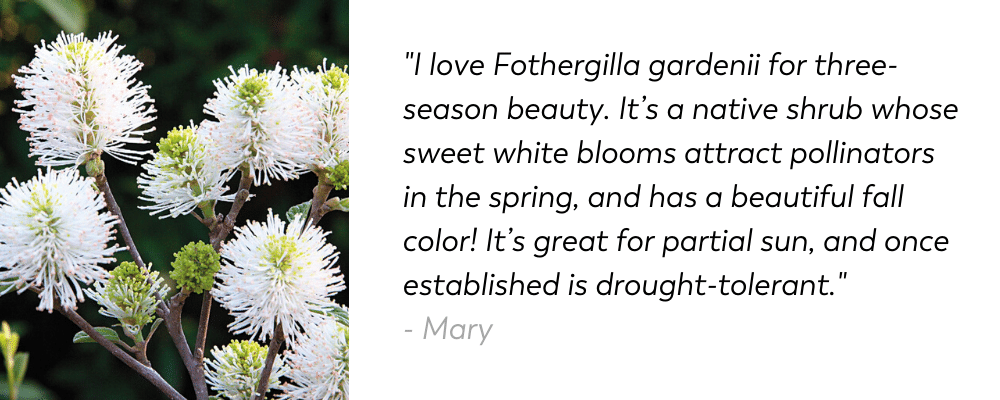
(Fothergilla gardenii, commonly known as dwarf fothergilla, grows in full sun to part shade as a spring-blooming shrub; flowers are best in full sun.)
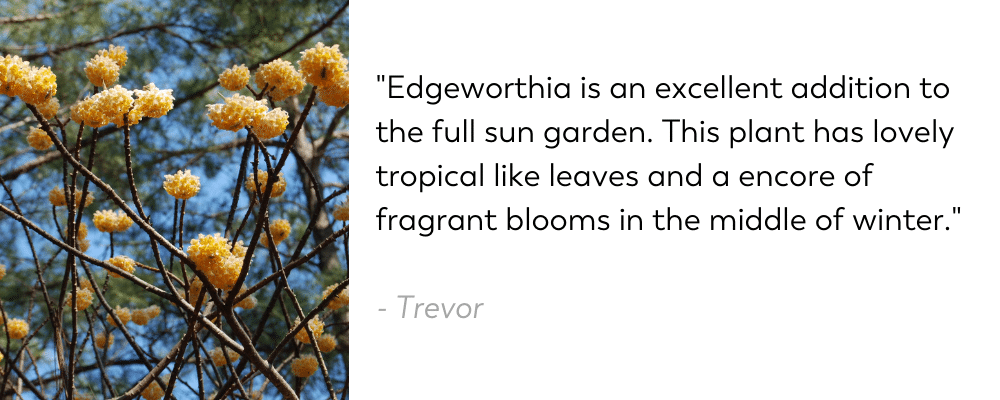
(Paperbush is the common name for Edgeworthiachrysantha. It grows
best in full sun to part shade in humus-rich, moist but well-drained soil.)
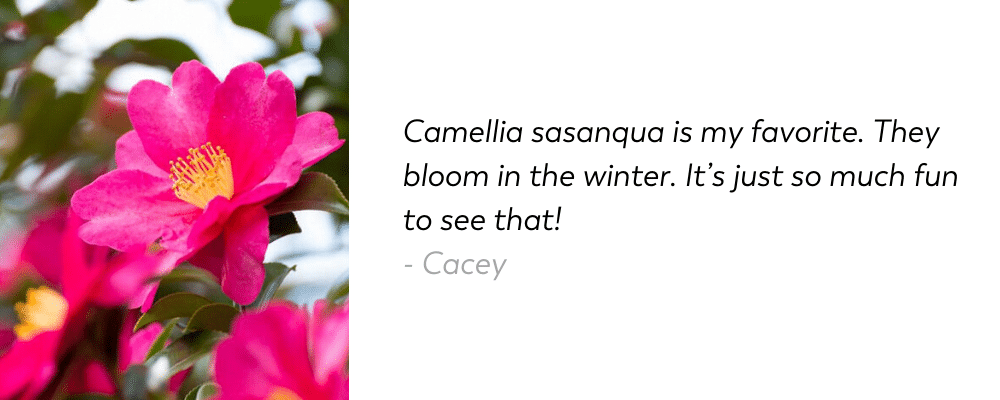
(Evergreen Camellia sasanqua is generally winter-hardy in Middle Tennessee.
It prefers evenly moist, well-drained acidic soil in part-shade.)
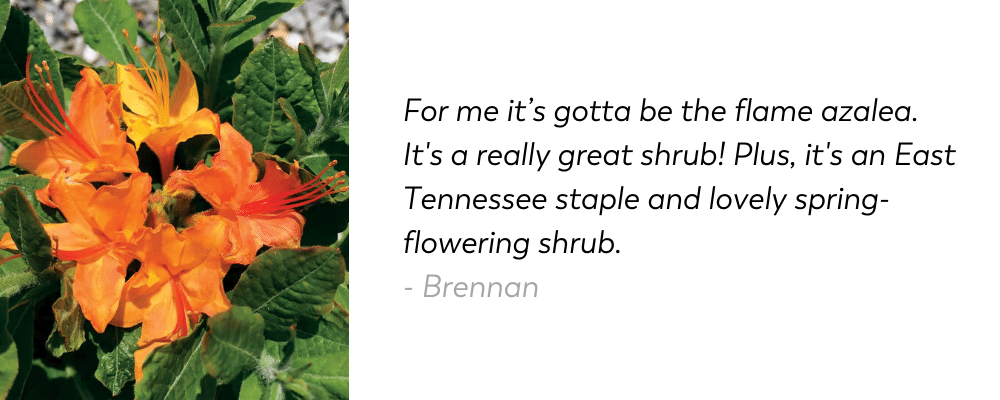
(Grow flame azalea — Rhododendroncalendulaceum – in light, acidic,
well-drained soil in sun-dappled shade. The showy yellow-to-orange flowers attract butterflies in spring.)
——————————————–
Visit the Gardens of Babylon Garden Center at 900 Rosa L. Parks Blvd. to find your favorite plants for indoors or in the landscape.
Give your landscape an energizing dose of tea this spring — compost tea, that is, a rich “drink” that uses the science of Mother Nature to enrich the soil.
“I learned about the importance of compost tea at least 20 years ago, and it just made sense to me,” says Gardens of Babylon owner Mark Kerske. “The soils in Tennessee are not only compacted due to heavy clay, but also depleted by the constant use of toxic fertilizers. Plants are now dependent on the fertilizers for growth, which have wiped out all the good, beneficial microbes in the soil.” Using compost tea is the best way to put the “good guys” back in the soil, Kerske says.
What, exactly, is compost tea?
“Compost tea is THE most natural fertilizer,” explains Troy Hinke, founder and owner of Living Roots Compost Tea in Chapmansboro, TN. It provides new life for soil – especially soil that has been abused, say, by heavy equipment during construction or renovation, or overuse of chemical fertilizers.
“Basically, it’s a liquid form of compost,” Hinke says. Knowledgeable gardeners understand it is the nutrients in compost that improve soil, but the magic is really in the micro-organisms that make the nutrients. “So we’re extracting the microorganisms and putting food in the water to get those organisms to reproduce at higher levels,” he explains.
The “food” sounds like a buffet of treats that soil can appreciate: fish hydrolysates, humic acid, kelp, bacteria, fungi and other ingredients to populate the brew. “The idea behind the concept is that bacteria and fungi are the first decomposers in nature, and they’re breaking down organic matter and hold their nutrients in their bodies. Their predators come along and eat them to make those nutrients in a plant-available form.”
It’s the circle of life on a tiny, tiny scale that provides big benefits for soil in need of help.
What compost tea is not is the runoff of water that percolates through a compost pile or bucket of soil. Hinke calls that leachate, or runoff, and it doesn’t have the benefits of true, actively aerated tea. In fact, it could have a negative effect on plants because of anaerobic or harmful organisms that may be present, Hinke says. Good compost tea starts with finished compost, is aerobic during the brewing process, with foods for the microorganisms to do their work.
“The biology is what makes the difference within compost and compost tea. It’s all about the life within that.”
Why use compost tea?
“It’s a natural form of fertility,” Hinke explains. With chemical fertilizers, the plants may get the correct organisms for growth, but the nutrients don’t regenerate. “Chemicals not only are harming the environment, but you’re spending more money, having to reapply the chemicals over and over again.”
Nature can do a better job, Hinke says. “With this more natural method you’re providing life to the soil, and the life and biology in the soil is making the nutrients available.” In other words, the generous, fortified tea is putting the life in the soil for the plants to manage their own nutrient needs.
“It’s the science behind Mother Nature. It’s how it works in the natural world.”
When? And how?
Spring, summer and fall are good seasons to give your landscape a dose of compost tea, Kerske says. “It’s usually applied once the soil temperature gets above 50 to 60 degrees.” It is applied to established lawns, but is especially good for new lawns started from scratch. If soil is compacted, he recommends three applications a year. “It’s taken years to make your soil bad, so it will take a couple years of applications to improve it.”
The amount to apply is measured per square foot; usually, a typical residential lawn benefits from 50 to 100 gallons of compost tea, Kerske says. The Gardens of Babylon landscape team can provide a total maintenance package with tea applications – “weed and green applications is how we refer to it,” he says. “It’s one of the tools we use throughout the year to keep peoples’ lawns and landscapes healthy.”
Learn more
After his extensive training in organic food production, composting and compost tea, Troy Hinke became the soil and compost tea specialist for Gardens of Babylon. In 2015 he moved to Chapmansboro and worked for a large-scale composting facility before starting Living Roots Compost Tea.
For a deep-dive into the relationship between soil and microbes and how compost tea contributes to the circle of soil life, Hinke has produced a ten-part podcast on the subject. Find What’s Brewing?: A Compost Podcast on Spotify, or in iTunes in the podcast Farm Land.
Ready to rejuvenate your soil with a dose of compost tea? Book a consultation with the Gardens of Babylon Landscape Maintenance team here.
Rain is good for gardens, of course. Too much of it, pooling in the wrong places in your yard, can cause drainage problems around your landscape and in your home.
“Proper drainage is probably one of the most important services that you should have around your home,” says Gardens of Babylon owner Mark Kerske. “You want to keep the water away from the foundation of your house.”
Water running into the basement or crawlspace can cause mold and other problems. Downspouts from the gutter can push rainwater into the foundation if they’re not properly routed. Water that leads to damage on any part of the property causes trouble over time. “The problem with poor drainage is erosion,” Kerske says. “It can affect the structure of your house or driveway.”
Change the course
There are several methods for guiding water away from the house, depending on the origin of the problem.
Downspout extension: If rainwater rushes through a gutter downspout near the foundation, a tube on the end of the downspout can empty rainwater farther away from the house during a downpour. The piping can be aboveground, or installed from the downspout in a trench that runs underground, out from under any mulched beds, where the water exits through a pop-up drainage emitter in the lawn.
Berm: The way water travels over the ground depends on the topography of the property, and if water naturally runs toward the house, a bern –a raised soil barrier or ridge — can be an effective way to direct water away from an area, Kerske says.
Swale: A trench-like depression in the ground forms a chute, of sorts, to direct the water flow. It can be lined with large chunks of rocks to slow the velocity of the water. “When you have a large amount of water coming toward your house, you want to slow it down,” he says. “If you direct water into the swale, you can get it to go where you want.”
Again, the lay of the land will suggest which method is best. “If the land behind the house is much higher, that’s where you really need a good swale or berm,” Kerske says. “The key is to move the water away from where it wants to naturally go.”
Design challenges
For any landscape design project, a designer and homeowner will discuss any drainage problems on the property that need to be addressed. “That’s the first step. We can do a drainage consultation and assess what the problem is.” Kerske says. “If it’s something they can’t do or don’t want to do, we can put together a design and calculate what it will cost to do the repairs.”
If the solution to a drainage problem calls for a swale or a berm, that can become part of the overall landscape design. “We can put native plants along the streambank. We can use groundcovers, and make it look like the swale belongs naturally in the landscape. That’s where a designer can really be of help,” Kerske says. “The designer can incorporate that drainage swale or berm into the landscape plans.”
Solving drainage and erosion problems in a landscape is the first step in any design plan, Kerske says. “There are so many hills here in Middle Tennessee. We do a lot of drainage work,” he says. “I think proper drainage is the most important part of landscaping.”
Imagine relaxing in your personal outdoor retreat. It probably has comfortable seating, just the right amount of shade and sun, and soothing music all around. A custom sound system designed for the specific needs of your landscape takes outdoor music enjoyment to the next level. An outdoor audio system is a nice addition to your outdoor living area, says Eric Van Grinsven, a landscape designer with the Gardens of Babylon design team. A backyard retreat is the area where you can get away to when you need a break. “It’s your little spot you can disappear to or just relax and be surrounded by nature.”
Indoor, outdoor: What’s the difference?
Your favorite music sounds good indoors because there are walls and ceilings to bounce the sound back to your ears. But even the best indoor speakers, when they’re outdoors, send music out into the open where sound quality is diminished. A system designed for outdoor spaces balances the sound coverage throughout the area, tailored specifically to your landscape design. Outdoor speakers are also more durable, built to withstand the sun, wind, rain, cold, dust, dirt, bugs and other elements that you expect in an outdoor environment.
How does outdoor audio work?
Gardens of Babylon is a certified dealer of Coastal Source, a landscape audio systems company based in Moorestown, NJ. Chris Marshall, a Coastal Source landscape lighting and audio designer, explains that a landscape audio design specialist will consider the size, shape and needs of an area, based on the landscape design submitted by the dealer. The setup generally includes a power supply, amplifier, audio streamer and speakers.
Interested in including audio in your backyard retreat? Schedule a free phone consultation through the Irrigation, Lighting & Audio portal on the Gardens of Babylon website. You can also schedule an in-person audio demonstration to hear how outdoor audio can transform your outdoor living areas.
My name is Dana and I’m with Gardens of Babylon and today I’m going to share with you my success tips for container planting so that your containers will look professional!
What kind of soil is the best for container planting?
So let’s talk about soil in our containers. That’s something that most people overlook – they get caught up with the beauty of the flowers. But, actually, the soil is the most important component, because that’s what’s going to feed out beautiful plants and give them nutrients. You want to get the best quality potting soil that you can for your containers. And I love to use one that’s rated for outdoor containers; it already has some micronutrients in it. We have lots of great quality soil and lots of different brands to choose from at Gardens of Babylon!
Pro tip: If you have pots that dry out a lot or if they’re in the hot sun you can actually buy some play sand and put it in the bottom of your containers and that will actually hold more moisture for you throughout the season! That way, you don’t have to be watering multiple times a day.
Decorate your Porch
There’s three design elements for your containers that you can follow – you need a thriller (something eye-catching), a spiller (a plant that cascades over the edges of the pot), and a filler (something to fill space between the larger plants)!
I always love to incorporate ornamental grasses because they’re gonna be very vertical and that there’s movement which I love. If you want this to be seen from the road and kind of have some curb appeal and you want people to turn their head I always incorporate yellow! You just sort of notice yellow and it always makes you turn your head! I also love to add some white flowers, especially if you’re gonna do a lot of big bold colors! White is that design element that brings all the colors together.
You always want to fertilize your plants as well, it’s sort of like giving your plants vitamins! I love to use flower tone.
Whatever brand you decide to use you just want to use it per package direction whatever it says. So I would then sprinkle in my fertilizer, water this in really well. As if your planters are flushed to the ground on your patio or porch it’s always helpful to get some little legs or prop them up with bricks so that there’s a little bit of air movement underneath your planters because what happens is our soil will kind of settle and if it’s right there flush with your patio or your porch it could clog and it could actually cause water to sort of sit in the bottom and rot our roots. So it’s always a good idea to kind of lift up our pots up off the ground so that that water can drain out throughout the season.
Plant love being pruned
So let’s talk about plant maintenance throughout the year. So just like we cut our fingernails or go get haircuts our plants actually need some maintenance throughout the year and if not they get scraggly they don’t bloom as well so, I just wanna let you know that plants love to be pruned.
Feel free, you’re not hurting them in any way they actually love it when you trim them and actually promote some new growth and it keeps them bushier and healthier. So what I would do especially with Coleus they tend, they tend to get sort of leggy you can always just go and take your pruners or sometimes just your fingernails and just snip off right here right before a leaf node, and I’ll show you on this one on the future what I would do is I would take my pruners and just prune the right there.
You can always just trim off any leaves that have gotten hits and then that what that’s gonna do is create, it’s gonna send a hormone when it down to this leaf node, it’s gonna signal to the plant I can go ahead and grow some more and gave new buds. Same with this there’s always just gonna be some like little scraggly leaves, just look you know you can you should even take your fingernail. Now this is just normal you know plants are just gonna they’re living creatures and they gonna require just a little bit of maintenance.
So we’ve talked about fertilizer and soil and plant care and this is gonna help set you up for success so, don’t be shy plants are very forgiving and go have fun!